
The US funeral industry is undergoing major changes, from soaring cremation rates and rising costs to the emergence of green burial options and digital memorials.
Whether you are planning ahead or navigating the loss of a loved one, understanding the latest data can help you make informed decisions. Here are over 30 up-to-date statistics about funerals in the United States for 2026.
After fifteen years serving American families as a funeral celebrant, I have watched the industry shift faster than at any point in my career. The figures below reflect what I see every week. More cremations. More personalization. Fewer traditional services. What the numbers cannot capture is the moment families stop talking about logistics and start telling stories. That is where the real service begins. Use the stats to plan. Use your heart for the rest.
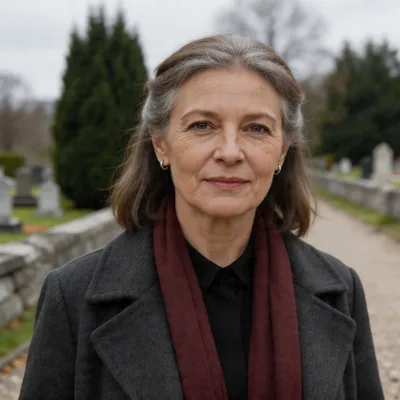 Rebecca Holloway
1. The average funeral with burial costs $8,300
The National Funeral Directors Association reports that the median cost of a funeral with viewing and burial is $8,300. This figure does not include cemetery fees, flowers, obituary notices, or the reception after the service, which can push the total well above $10,000.
Funeral costs have risen 5.8% over the past two years. Most families ultimately spend between $7,500 and $10,000 for a traditional funeral with all associated expenses included.1
2. Direct cremation averages just $2,202
For families seeking the most affordable option, direct cremation costs an average of $2,202 according to After.com. This approach skips the viewing, formal ceremony, and embalming, making it roughly $6,300 less expensive than a traditional burial funeral.
Direct cremation has become increasingly popular among budget-conscious families. Some providers now offer basic cremation packages for under $1,000, though availability varies by state and metro area.2
3. A funeral with cremation costs a median of $6,280
For families choosing cremation with a funeral service, the NFDA reports a median cost of $6,280. This option includes a ceremony, viewing or visitation, and cremation rather than burial, but still excludes extras like flowers and a reception.
Cremation funeral costs have increased by 8.1% over two years, slightly outpacing the rate of increase for traditional burial funerals. Despite being less expensive overall, cremation services are not immune to rising prices.3
4. Average burial plot costs $2,750 nationally
The average burial plot in the US costs approximately $2,750, though prices vary enormously by location. Public cemetery plots average around $1,500, while private cemetery plots average $3,500. In major metropolitan areas like New York City or San Francisco, plots can exceed $7,000.
Beyond the plot itself, families must also budget for a burial vault (averaging $1,572), a headstone ($1,000 to $3,500 depending on style), and opening-and-closing fees charged by the cemetery, which can add another $1,000 or more.4
5. Cremation is chosen in 63.4% of US deaths in 2025
The NFDA projects that 63.4% of Americans who die in 2025 will be cremated, while just 31.6% will choose traditional burial. This marks a dramatic reversal from 1980, when cremation accounted for less than 10% of dispositions.
Cost savings, environmental concerns, geographic mobility, and changing religious attitudes have all contributed to the shift. Cremation overtook burial as the most common choice around 2015 and has widened its lead every year since.5
6. The US funeral home market is valued at $13.7 billion in 2025
According to Grand View Research, the US funeral home market reached $13.03 billion in 2024 and is projected to hit $13.72 billion in 2025. This figure covers funeral homes and related service providers but does not include cemeteries, crematories, or monument dealers.
The broader death care industry, which includes all related sectors, is estimated at over $20 billion annually when combining funeral services, cremation facilities, and cemetery operations.6
7. There are over 15,400 funeral homes in the US
The NFDA counts more than 15,401 funeral homes operating across the United States, employing approximately 105,300 people. About 75% of these businesses are family-owned or privately held, giving the industry a distinctly local character.
Despite consolidation by large corporations, the majority of funeral homes remain small, community-based operations. Many have served the same towns and cities for multiple generations.7
8. The funeral market is projected to reach $23.7 billion by 2034
Market.us projects the US funeral homes market will grow from $13.1 billion in 2024 to $23.7 billion by 2034, representing a compound annual growth rate (CAGR) of 6.1%. The aging Baby Boomer generation and evolving consumer preferences are the primary drivers.
The forecast period from 2025 to 2034 accounts for increased demand from a growing elderly population, higher service customization, and the expansion of pre-planned funeral offerings.8
9. The NFDA industry generates $16.3 billion in revenue
According to the NFDA, the US funeral home industry generates $16.3 billion in total revenue. When crematories and cemeteries are included, the figure rises by an additional $4.274 billion for a combined death care sector of over $20 billion.
Rising cremation rates are putting pressure on per-service revenue, as cremation typically costs less than burial. Industry reports suggest average funeral home profit margins have declined by as much as 37% in recent years.9
10. Casket markups range from 300% to 500%
Funeral homes typically mark up caskets by 300% to 500% above wholesale cost, according to After.com. Metal caskets average $2,500, while wood caskets average $3,000. Premium designer caskets can cost up to $22,000.
Under the Federal Trade Commission's Funeral Rule, consumers have the right to purchase a casket from any third-party retailer and have the funeral home use it without charging a handling fee. Many families are unaware of this right, which can save thousands of dollars.10
11. The global green funerals market is worth $2.3 billion
Emergen Research valued the global green funerals market at $2.3 billion in 2024 and projects it will reach $6.7 billion by 2034, growing at 11.2% annually. North America accounts for 34.7% of global green funeral revenue, with the US alone representing roughly 24% of the worldwide market.
Green burial is the largest segment at 52.4% of the market, followed by biodegradable urn cremation at about 26%. Natural organic reduction (human composting) and resomation (water cremation) are smaller but rapidly growing categories.11
12. The US funeral home market is growing at 5.9% annually
Grand View Research reports a CAGR of 5.92% for the US funeral homes market from 2025 to 2030, with the market projected to reach $18.29 billion by 2030. Growth is driven by rising death counts, higher service prices, and increasing adoption of premium and customized offerings.
Green and environmental funeral services represent the fastest-growing segment, while pre-planned and pre-paid services are emerging as a significant growth area as more Americans plan ahead for their end-of-life arrangements.12
13. Traditional funeral services hold 45.8% market share
In 2024, traditional funeral services still accounted for 45.8% of the funeral home market by revenue, according to Market.us. This segment includes embalming, viewing, a ceremony, and burial, which remains the most expensive and therefore highest-revenue service type.
However, the cremation segment is growing faster, and green and pre-planned funeral services are the fastest-growing niches. The traditional segment's market share is expected to decline gradually over the next decade.13
14. 61.4% of consumers would consider green funeral options
An NFDA consumer survey found that 61.4% of respondents would explore environmentally friendly funeral options, up from 55.7% in 2021. This growing interest is driven by rising environmental awareness and the desire for simpler, more natural end-of-life choices.
Green options include biodegradable caskets, natural burial grounds without embalming, tree pod burials, and conservation cemetery plots. The gap between expressed interest and actual uptake remains significant, however, largely due to limited availability in many regions.14
15. The US death rate is projected at 9.28 per 1,000 people in 2025
US-Funerals.com reports a projected death rate of 9.28 deaths per 1,000 people for 2025. This rate has been climbing steadily as the population ages and the large Baby Boomer cohort enters its later years.
Higher death rates translate directly into increased demand for funeral homes, cremation services, and cemeteries. Some regions, particularly in the South and Midwest, already experience higher-than-average demand.15
16. Funeral costs vary widely by state
The national average funeral cost is roughly $8,500, but state-level figures range from about $7,533 in Oregon to $9,697 in Minnesota, according to After.com. States with higher costs of living, greater regulatory requirements, or fewer funeral providers tend to have more expensive services.
Rural areas often offer more affordable options than large cities, where real estate costs, labor rates, and overhead push prices higher. Families willing to consider providers slightly outside their immediate area can sometimes find significant savings.16
17. Over 3 million Americans die each year
According to the Centers for Disease Control and Prevention, the United States recorded 3,072,666 deaths in 2024, with a death rate of 903.4 per 100,000 people. Heart disease and cancer remain the two leading causes of death, together accounting for over 1.3 million fatalities annually.
As the Baby Boomer generation continues to age, total annual deaths are expected to rise steadily over the next two decades, increasing demand for funeral services across the country.17
18. Seven US states allow human composting
As of 2024, seven US states have legalized natural organic reduction, commonly known as human composting. Washington became the first in 2019, followed by Colorado, Oregon, Vermont, California, New York, and Minnesota.
Additionally, nearly 24 states now permit resomation (alkaline hydrolysis or water cremation), which uses water and chemicals instead of flame. These alternative disposition methods reflect growing consumer demand for sustainable options beyond traditional cremation and burial.18
19. Digital memorials and livestreamed funerals are now standard
The COVID-19 pandemic accelerated the adoption of digital memorial tools, and many of these changes have become permanent. Grand View Research notes that online guestbooks, tribute videos, and webcasted funeral services are now standard offerings at most funeral homes.
Virtual attendance options allow distant family members and friends to participate in services they otherwise could not attend. Many funeral homes now offer hybrid in-person and online ceremonies as a default part of their service packages.19
20. 77% of funeral service students are women
A significant demographic shift is underway in the funeral profession. According to Market.us, 77% of the approximately 7,000 students enrolled in funeral service education programs in 2022 were women, a dramatic change from what was historically a male-dominated field.
This shift may influence the industry in coming years, potentially bringing new perspectives on service design, grief support, and family communication. Female funeral directors already report higher satisfaction scores from the families they serve.20
21. 58.3% have attended funerals at non-traditional venues
The NFDA found that 58.3% of surveyed consumers have attended a funeral or memorial service held at a non-traditional venue, such as a park, beach, restaurant, farm, or family home. This reflects a broader trend toward personalization in end-of-life celebrations.
Themed and customized funerals that reflect the deceased's personality, hobbies, or passions are becoming more common. From motorcycle processions to celebrations at sports stadiums, families are increasingly moving away from one-size-fits-all services.21
22. Cremation is projected to reach 82% by 2045
Long-range projections indicate that more than 82% of Americans will choose cremation by 2045. The shift is expected to be gradual but steady, with growth slowing as the rate approaches its eventual plateau.
In several Western states, including Washington, Oregon, and Nevada, cremation rates already exceed 80%. Mississippi, Alabama, and Kentucky have the lowest rates, though even these states are seeing year-over-year increases.22
23. AARP: 55 percent of Americans aged 50+ have made no funeral plans
An AARP survey of 1,500 adults aged 50 and older found that 55 percent had not made any pre-need funeral arrangements, despite 78 percent believing they should. Only 22 percent had communicated end-of-life wishes in writing. African American and Hispanic respondents were 14 percentage points less likely to have pre-arrangements than white respondents.23
24. Funeral flowers average $600 per service
Floral arrangements for a funeral service average around $600, an often-overlooked expense not included in most funeral home price quotes. Lilies, carnations, roses, and chrysanthemums remain the most popular funeral flowers in the US, each carrying traditional symbolic meaning.
White lilies symbolize the soul's return to peace, chrysanthemums represent honor and respect, and pink carnations stand for remembrance. Many families now request charitable donations in lieu of flowers, though floral tributes remain deeply rooted in American funeral tradition.24
25. Bureau of Labor Statistics tracks 40,000 funeral service workers nationally
The US Bureau of Labor Statistics counts approximately 40,200 funeral service workers and morticians employed across the country, with median annual pay of around $58,900. Employment in the field is projected to grow about 3 percent through 2032, in line with population ageing. The number of new mortuary science graduates exceeds 1,400 each year.25
26. Life expectancy in the US is 79.0 years
The CDC reports that average life expectancy in the United States has recovered to 79.0 years, following a dip during the COVID-19 pandemic. Infant mortality stands at 5.52 deaths per 1,000 live births.
While life expectancy has improved overall, it varies significantly by state, race, and socioeconomic status. Regions with lower life expectancy tend to have higher per-capita demand for funeral services.26
27. US Census records 3.4 million deaths in the United States
The US Census Bureau, drawing on national vital statistics, reported approximately 3.4 million deaths in the United States in 2023. This represents a crude death rate of around 10 per 1,000 population, slightly higher than the 2019 pre-pandemic baseline. Heart disease and cancer remain the leading causes, together accounting for nearly 40 percent of all deaths.27
28. US cremation rate reached 61.8% in 2024
The Cremation Association of North America (CANA), which has tracked cremation data for over 25 years, reports the US cremation rate reached 61.8% in 2024, up from 56.2% in 2020. CANA notes the growth rate is currently at its peak velocity.
By 2029, CANA projects the rate will reach 67.9%. Meanwhile, Canada already has a cremation rate of 76.7%, offering a glimpse of where the US may be headed in coming years.28
29. Resomation is legal in nearly 24 US states
Resomation, also known as alkaline hydrolysis or water cremation, is now legal in nearly 24 US states. This process uses water and a chemical solution to reduce the body to bone fragments, producing roughly one-third the carbon emissions of flame cremation.
As environmental concerns continue to influence consumer choices, resomation is expected to grow from a niche offering into a mainstream alternative. Several states have legislation pending that would legalize the practice, potentially expanding access to the majority of Americans within the next few years.29
30. Forbes: green burial demand has risen 72 percent since 2020
Forbes reported that demand for green burial services in the United States grew 72 percent between 2020 and 2024, citing data from cemetery industry associations. Roughly 300 US cemeteries are now certified for natural burial, up from 100 in 2015. Average cost of a green burial is approximately $2,500, undercutting traditional burial by more than half.30
31. Major corporations are consolidating the funeral industry
While 75% of funeral homes remain family-owned, corporate consolidation continues to reshape the industry. Service Corporation International (SCI), the largest funeral services company in the US, operates over 1,900 funeral homes and 500 cemeteries across North America.
Grand View Research notes that strategic partnerships and mergers-and-acquisitions activity is increasing as larger companies seek to gain market share. Smaller independent funeral homes face growing pressure from rising costs, declining per-service revenue, and competition from low-cost cremation providers.31
32. Funeral directors must be licensed in all 50 states
Every US state requires funeral directors to hold a professional license, though specific requirements vary by state. Most states mandate completion of a mortuary science degree, passage of a national board exam, and a supervised apprenticeship period.
Licensing ensures that families receive services from trained, regulated professionals during one of the most difficult moments of their lives. The profession faces a shortage of new entrants, even as demand for services continues to grow.32
33. NerdWallet: average cremation now $6,971 nationally
NerdWallet calculated, using industry and provider price data, that the average cremation funeral with a service in the United States costs $6,971 in 2024. Direct cremation without a service averages just $1,300, while a traditional cremation with viewing reaches $8,500. Eight states now have direct cremation rates above 65 percent of all dispositions.33
34. 37.8% of cremation families bury remains in a cemetery
Among those who choose cremation, 37.8% plan to bury or inter the remains in a cemetery, while 37.1% intend to keep the ashes in an urn at home. Another 33.5% prefer to scatter remains in a meaningful location, and 10.5% would split the remains among relatives.
These findings reveal that choosing cremation does not necessarily mean avoiding the cemetery entirely. Many families still want a permanent, visitable memorial site even when they opt for cremation over burial.34
35. NPR: human composting now legal in 12 US states
NPR reported that natural organic reduction, commonly called human composting, is now legal in 12 US states including Washington, Oregon, Colorado, California, New York and Maine. The first US facility, Recompose in Seattle, has processed more than 700 bodies since 2020. Pricing ranges from $5,000 to $7,500 per disposition.35
36. NYT: death-doula workforce grows past 4,000 in the US
The New York Times reported that the National End-of-Life Doula Alliance now lists more than 4,000 active death doulas in the United States, up from roughly 300 in 2015. Average hourly fees range from $50 to $100, with full end-of-life packages reaching $3,500. Approximately 11 percent of US hospices now partner formally with death doulas.36
37. COVID-19 permanently changed funeral practices
The pandemic years of 2020 and 2021 saw approximately 3.4 million total US deaths, driving record increases in cremation rates and forcing the adoption of remote and delayed funeral services. Many of these changes have become permanent features of the industry.
Live-streamed ceremonies, hybrid attendance models, and delayed memorial services are now widely accepted. Families who experienced these formats during the pandemic often continued to prefer them for their convenience and inclusivity.37
38. Prepaid funeral costs rose 5.8% in two years
According to Vision Retirement, the median cost of a funeral and burial has increased by 5.8% in just two years, reaching $8,300 as of 2025. Cremation with a service has risen even faster at 8.1% over the same period. These increases outpace general inflation.
Financial advisors increasingly recommend incorporating funeral expenses into overall retirement planning rather than purchasing separate pre-need contracts. Options include final expense life insurance policies (typically $1,000 to $50,000 in coverage) or designated savings in FDIC-insured accounts.38
Sources
- NFDA(nfda.org)
- After.com(after.com)
- NFDA(nfda.org)
- After.com(after.com)
- NFDA(nfda.org)
- Grand View Research(grandviewresearch.com)
- NFDA(nfda.org)
- Market.us(market.us)
- NFDA(nfda.org)
- After.com(after.com)
- Emergen Research(emergenresearch.com)
- Grand View Research(grandviewresearch.com)
- Market.us(market.us)
- NFDA(nfda.org)
- US-Funerals.com(us-funerals.com)
- After.com(after.com)
- CDC(cdc.gov)
- Emergen Research(emergenresearch.com)
- Grand View Research(grandviewresearch.com)
- Market.us(market.us)
- NFDA(nfda.org)
- US-Funerals.com(us-funerals.com)
- AARP(aarp.org)
- After.com(after.com)
- US Bureau of Labor Statistics(bls.gov)
- CDC(cdc.gov)
- US Census Bureau(census.gov)
- CANA(cremationassociation.org)
- Emergen Research(emergenresearch.com)
- Forbes(forbes.com)
- Grand View Research(grandviewresearch.com)
- Market.us(market.us)
- NerdWallet(nerdwallet.com)
- NFDA(nfda.org)
- NPR(npr.org)
- New York Times(nytimes.com)
- US-Funerals.com(us-funerals.com)
- Vision Retirement(visionretirement.com)
Frequently Asked Questions
What does the average funeral with burial cost in the US?
The National Funeral Directors Association reports a median cost of $8,300 for a funeral with viewing and burial. That figure leaves out cemetery fees, flowers, obituary notices, and the reception, which can push the total well above $10,000. Most families end up spending between $7,500 and $10,000 for a traditional burial funeral with all the extras included.
How much cheaper is direct cremation than a traditional burial?
Direct cremation averages just $2,202, making it roughly $6,300 less expensive than a traditional burial funeral. It skips the viewing, formal ceremony, and embalming. Some providers now offer basic cremation packages for under $1,000, though availability varies by state and metro area.
How common is cremation compared to burial in the US now?
The NFDA projects that 63.4% of Americans who die in 2025 will be cremated, while just 31.6% will choose traditional burial. This is a dramatic reversal from 1980, when cremation was under 10% of dispositions. Cremation overtook burial as the most common choice around 2015 and has widened its lead every year since.
How many funeral homes operate in the United States?
There are more than 15,401 funeral homes across the US, employing roughly 105,300 people. About 75% of these businesses are family-owned or privately held. Despite consolidation by large corporations, most remain small, community-based operations, many serving the same towns for generations.